
Free written scope consultation - allowances, timeline, and change-order rules on paper before a single trade is scheduled
James Hardie Kitchen Remodeling: The Los Angeles Owner’s Guide
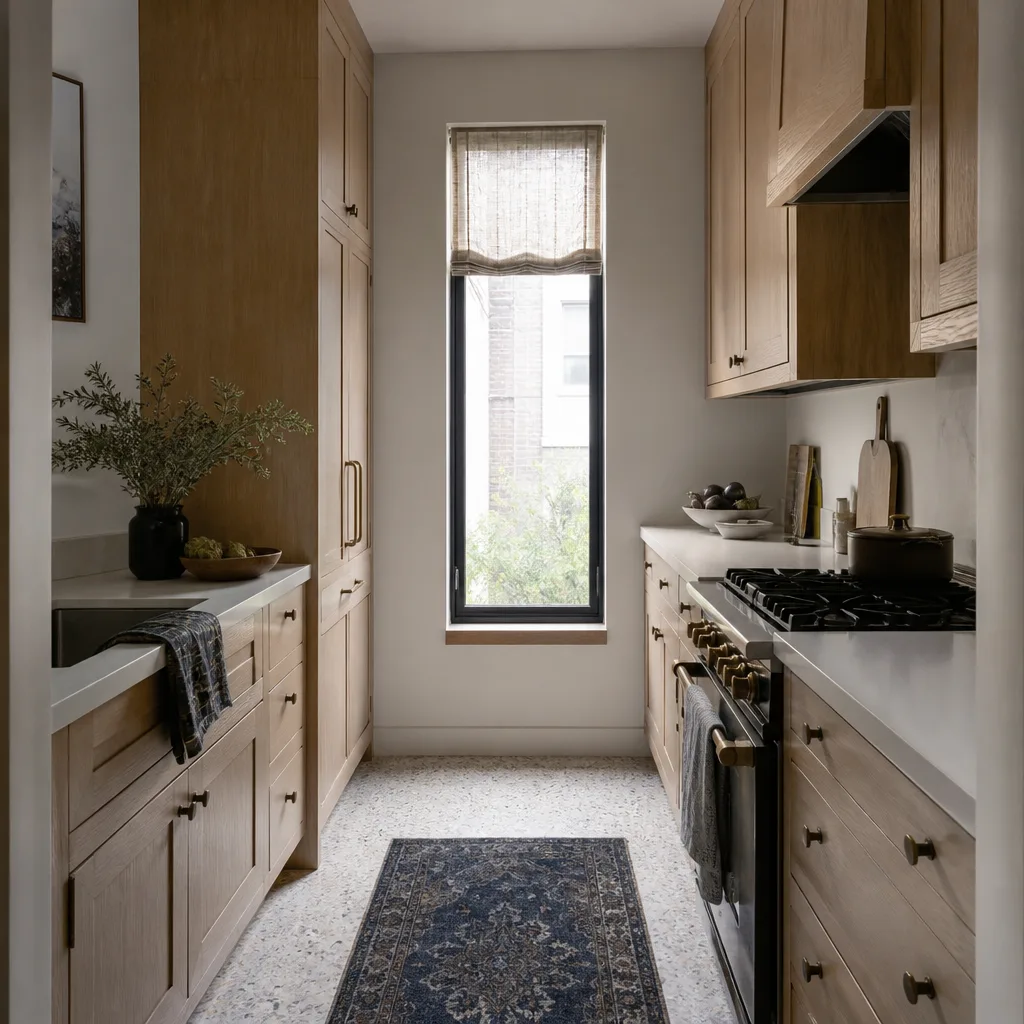
James Hardie kitchen remodeling in Los Angeles typically runs $16,520 to $53,100, depending on the size of the kitchen, the scope of the cabinetry and countertop work, and whether any walls or plumbing need to move. Most homeowners call us after living with a kitchen that works against them for years: warped cabinet doors, cracked tile, a layout that makes cooking feel like a wrestling match with a pantry shelf. The good news is that James Hardie’s fiber cement siding and trim products hold up well behind kitchen walls, but the kitchen itself – the parts you touch, pull, and scrub every day – has a lifespan, and the signs of age are usually obvious once you know what to look for.
We stock and install James Hardie-compatible kitchen materials in Los Angeles, including HardieBacker cement board for tile substrates, and we work with specification-grade cabinetry and surfaces that pair cleanly with the Hardie panels already in your home. If you’ve got a failing backsplash, water-warped cabinet bases, or countertops that have seen better decades, we can match the right materials and get your kitchen working again without guesswork. This page covers what fits, what fails, what it costs, and when to stop patching and start replacing.
Which James Hardie Models This Applies To
Most Los Angeles homes built or remodeled since the late 1990s use James Hardie products in one of three places: exterior siding, interior wet-area backer board, or trim and fascia. For kitchens, the product that matters most is HardieBacker cement board – the gray, cement-fiber panel installed behind tile on floors, countertops, and backsplashes. The two common versions are HardieBacker 1/4″ board (used for floors and countertops) and HardieBacker 1/2″ board (used for walls). They look similar, but they are not interchangeable. The 1/4″ board flexes too much for vertical wall tile, and the 1/2″ board adds unnecessary height on a countertop deck.
Identifying what’s under your tile matters because tile adhesion and water resistance depend on the right board and the right fasteners. HardieBacker requires corrosion-resistant screws (usually ribbed or square-drive backer-on screws) and alkali-resistant mesh tape on the seams. If a previous contractor used drywall screws or skipped the tape, the board may still look fine while the tile above it is quietly loosening. We also see HardieBacker installed with the rough side facing out – the smooth side is milled for mastic, the rough side for thinset, and getting it backwards is a classic Los Angeles flip-and-flip-again mistake. When you’re deciding between OEM James Hardie board and aftermarket cement board, the honest answer is this: HardieBacker is the OEM standard for a reason, and the price difference is small enough that aftermarket board rarely saves you enough to justify the risk on a tile job.
Styles & brands we work with







Signs Your James Hardie Kitchen Remodeling Is Failing
- Tile sounds hollow when you tap it. This is the classic sign that the thinset bond has broken between the tile and the HardieBacker substrate underneath. In Los Angeles kitchens, we see this most often after years of temperature swings between un-air-conditioned days and steamy cooking nights – the expansion and contraction works tiles loose one by one.
- Grout keeps cracking in the same lines. If you’ve re-grouted the same joint twice and it cracks again, the problem isn’t the grout. It’s movement in the substrate or the cabinet base below it. HardieBacker is dimensionally stable, but if it was installed over a spongy subfloor or on cabinets that have settled, no grout will hold.
- Base cabinets feel soft at the toe kick or sink base. Water from a slow sink drain leak or a dishwasher drip wicks into the cabinet box and turns MDF or particleboard into oatmeal. By the time you feel it under the toe kick, the bottom of the cabinet is usually gone. This is a common failure point in Los Angeles kitchens built in the 1990s and early 2000s.
- Countertops are separating from the wall at the backsplash. If you can slide a credit card behind the backsplash tile, the wall behind it has moved or the adhesive has failed. In homes with HardieBacker walls, this often traces back to improper seam taping – the joint flexes, the tile pops, and the gap widens.
- Doors and drawers drift open or no longer close square. This is usually not the hinge. It’s the cabinet box itself, which has swelled from moisture or shifted as the floor settled. Adjusting hinges on a twisted box buys you a few months; replacing the box buys you a decade.
See the difference
 Before
 After
After Before
 After
After Before
 After
AfterReplacement Cost & What’s Included
A James Hardie-related kitchen remodel in Los Angeles carries a wide range because the work can be surgical or structural. On the lower end, replacing a failed backsplash with new HardieBacker, tile, and grout runs about $945 to $2,950. Replacing water-damaged base cabinets and reinstalling countertops falls between $4,720 and $15,340. A full kitchen remodel – including HardieBacker substrate, new cabinetry, countertops, island, and backsplash – lands between $16,520 and $53,100 across Los Angeles.
Every quote is a written, line-item price delivered before any work starts. No verbal estimates that grow at the end, no change orders that show up as surprises. The price includes demolition of the failing materials, disposal, substrate prep, installation, and a written guarantee on the work. We also verify every crew member by name and photo before they arrive – that’s the Threshold Standard, and it’s how we’ve operated since 2004. If something fails within 365 days of completion, we return and make it right at no charge.
DIY or Call Us?
There are a few things an owner can safely check before calling. Confirm whether your tile is bonded to HardieBacker or to drywall by removing a single outlet cover and looking at the edge of the cut. If you see gray cement board, good. If you see white gypsum, moisture from the sink area has been working against you from day one. Check under the sink base with a flashlight and feel for softness. Look at the grout lines at the countertop-to-backsplash joint – that’s where movement shows first.
What we would not recommend is pulling off tile, cutting cement board, or attempting a substrate repair on your own. Fiber cement dust is a respiratory hazard, cutting HardieBacker without the right shears or blade creates silica dust that belongs nowhere near your lungs, and a botched substrate repair means the next tile job fails twice as fast. If your kitchen is showing real signs of age – soft cabinets, loose tile, cracked grout – call us at (213) 632-5711 for a free estimate, and we’ll tell you exactly what’s wrong and what it costs to fix.
FAQs
A well-installed kitchen on HardieBacker substrate typically lasts 20 to 30 years in Los Angeles before cabinets, countertops, or tile begin to show real wear, and the HardieBacker itself often outlives the finishes on top of it. The weak points are usually the cabinet boxes and the seal at the sink, not the cement board. Call (213) 632-5711 for a free inspection if your kitchen is past the 20-year mark.
Small areas – a few popped tiles, a single cracked grout line – can sometimes be reset and re-grouted if the HardieBacker underneath is still solid. If the board itself has flexed or soaked through, patching is throwing money at a problem that will reappear. We’ll tell you honestly which situation you have before quoting anything.
A full kitchen remodel with James Hardie substrate, new cabinetry, and countertops usually takes 4 to 8 weeks depending on permitting, material lead times, and the condition of the walls and floor underneath. A backsplash replacement or cabinet swap is typically done in 3 to 5 days. We give you a written schedule with the written price.
We stock HardieBacker cement board in both 1/4″ and 1/2″ on our trucks, along with the correct backer-on screws, alkali-resistant mesh tape, and thinset for tile work. For cabinetry and countertops, we order from specification-grade partners including KraftMaid, Cambria, and Silestone, which usually arrive within a week in Los Angeles. Call (213) 632-5711 and we’ll confirm what’s in stock for your job.
Know who’s coming, know what it costs, know it’s guaranteed – everything else is just noise. Mason Remodeling Co Los Angeles is an independent service provider and is not affiliated with James Hardie. We’ve been remodeling kitchens across Los Angeles since 2004, and Isaac Pruett has spent two decades on residential and light commercial jobs throughout LA County. When you call, you’ll get a straight answer about your kitchen, a written price, and a crew you can recognize at the door.
Written by Isaac Pruett, Owner, Mason Remodeling Co at Mason Remodeling Co Los Angeles, serving Los Angeles and nearby areas.


