
Free written scope consultation - allowances, timeline, and change-order rules on paper before a single trade is scheduled
James Hardie Home Additions & ADU: The Los Angeles Owner’s Guide
When a James Hardie fiber-cement exterior product fails on a Los Angeles home addition or ADU, the most common culprits are cracked plank siding, failed flashing at the transition points, or improperly sealed joints around windows and door openings. In LA’s climate, we replace or repair these components as part of larger addition and ADU projects that typically run $53,100 – $153,400 complete, though isolated James Hardie siding repairs around an existing structure usually start far lower. Most LA homeowners notice the problem after the first heavy winter rain: a soft spot near the baseboard, paint bubbling on an interior wall, or a visible gap where the siding meets the roofline.
We stock James Hardie-compatible trim, flashing, and fasteners on our trucks for most service calls, and we can source full panel replacements within a few days for anything we don’t carry. You won’t wait weeks for the part. That matters in Los Angeles, where a failed exterior component on an ADU becomes a water-intrusion problem fast.
Key takeaways:
- James Hardie siding failure on additions and ADUs in Los Angeles is almost always water intrusion at seams, flashings, or penetrations, not the fiber cement itself.
- Full addition or ADU projects run $53,100 – $153,400. Isolated siding and trim repair is priced per linear foot and per square foot, with written quotes before work starts.
- The Threshold Standard applies to every crew member who arrives: name and photo sent before the visit, photo ID badge at the door, clean marked uniform.
Which James Hardie Models This Applies To
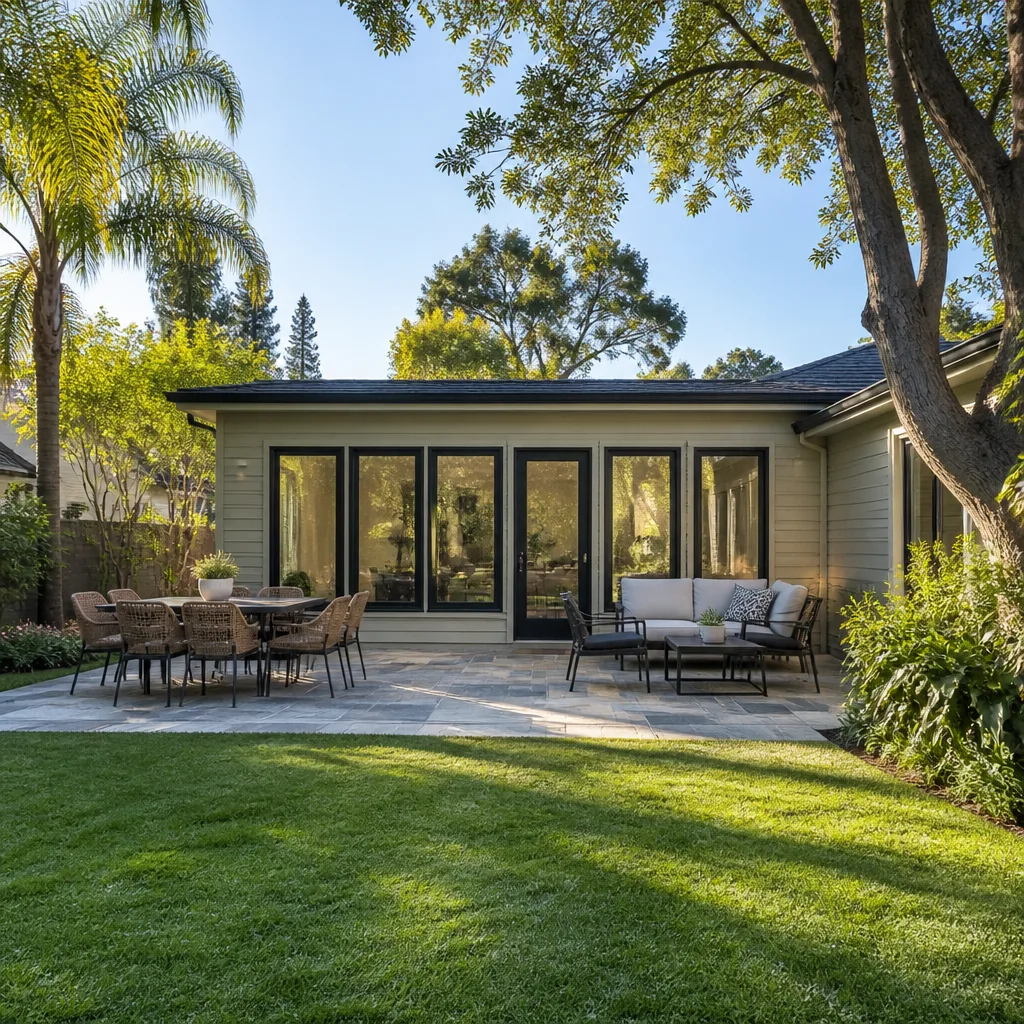
James Hardie’s fiber-cement product lines for Los Angeles residential work break into a few categories. HardiePlank lap siding comes in 5/16″ and 7/16″ thicknesses, in widths from 4″ to 12″, and the thicker profile is what we specify on additions and ADUs because it holds up better against LA’s dry-season sun exposure and wet-season rain cycles. HardiePanel vertical siding is a 4×8 or 4×10 sheet product used for gable ends and soffits. HardieTrim boards and HardieSoffit complete the exterior envelope.
Here’s the compatibility gotcha most Los Angeles homeowners don’t know: original-build ADUs from the 2010s often used the older HardieZone HZ5 product, while current code-compliant work requires HZ10-rated product for Southern California’s fire-prone zones. You cannot mix HZ5 and HZ10 on the same wall assembly and expect the warranty or the fire rating to hold. If your addition or ADU predates roughly 2015, we verify the existing rating by checking the printed back-side code stamps on a removed section before ordering replacements. That prevents a mismatched patch job that looks fine for a year and fails after the first big rain.
On OEM versus aftermarket: James Hardie engineered trim and flashing are matched to their siding profiles, and we use them on any visible finished surface. For hidden flashings and housewrap transitions, quality aftermarket products (like certain Slicker or moisture-management components) do the job at a lower materials cost, and we’ll show you both options on the written quote.
We’re an independent Los Angeles contractor, not a James Hardie dealer or affiliate. That means we recommend the right part for your structure, not the part that moves inventory.
Styles & brands we work with







Signs Your James Hardie Home Additions & ADU Is Failing
- Interior paint bubbling or peeling near baseboards on an exterior wall. This is water wicking through a failed joint or flashing behind the siding. By the time paint bubbles, moisture has already saturated the wall cavity in Los Angeles’s winter rain season.
- Visible cracking on plank siding edges or corners. Fiber cement is brittle at edges. Hairline cracks at nail points or mitered corners mean the fasteners were overdriven or the trim wasn’t gapped properly for thermal movement, and those cracks admit water.
- Gaps opening between siding boards and window or door trim. LA’s temperature swings, especially in the Valley and inland neighborhoods, cause expansion and contraction that pulls caulk joints apart. A 1/16″ gap is enough to let wind-driven rain in.
- Dark staining running down from an exterior corner or roofline transition. That’s tannin and dirt being carried by water tracking behind the siding. It means the kickout flashing at the roof-to-wall intersection has failed or was never installed.
- Soft or crumbling areas you can press with a finger. Fiber cement itself doesn’t rot, but the OSB or plywood sheathing behind it does. A soft spot means the siding has been leaking long enough to compromise the structure.
Any of these symptoms on a Los Angeles hillside or canyon home is a bigger deal than on flat ground, because drainage paths and wind exposure accelerate the damage. We’ve seen ADUs in Silver Lake and Echo Park go from a small corner stain to a full sheathing replacement in one season.
See the difference
 Before
 After
After Before
 After
After Before
 After
AfterReplacement Cost & What’s Included
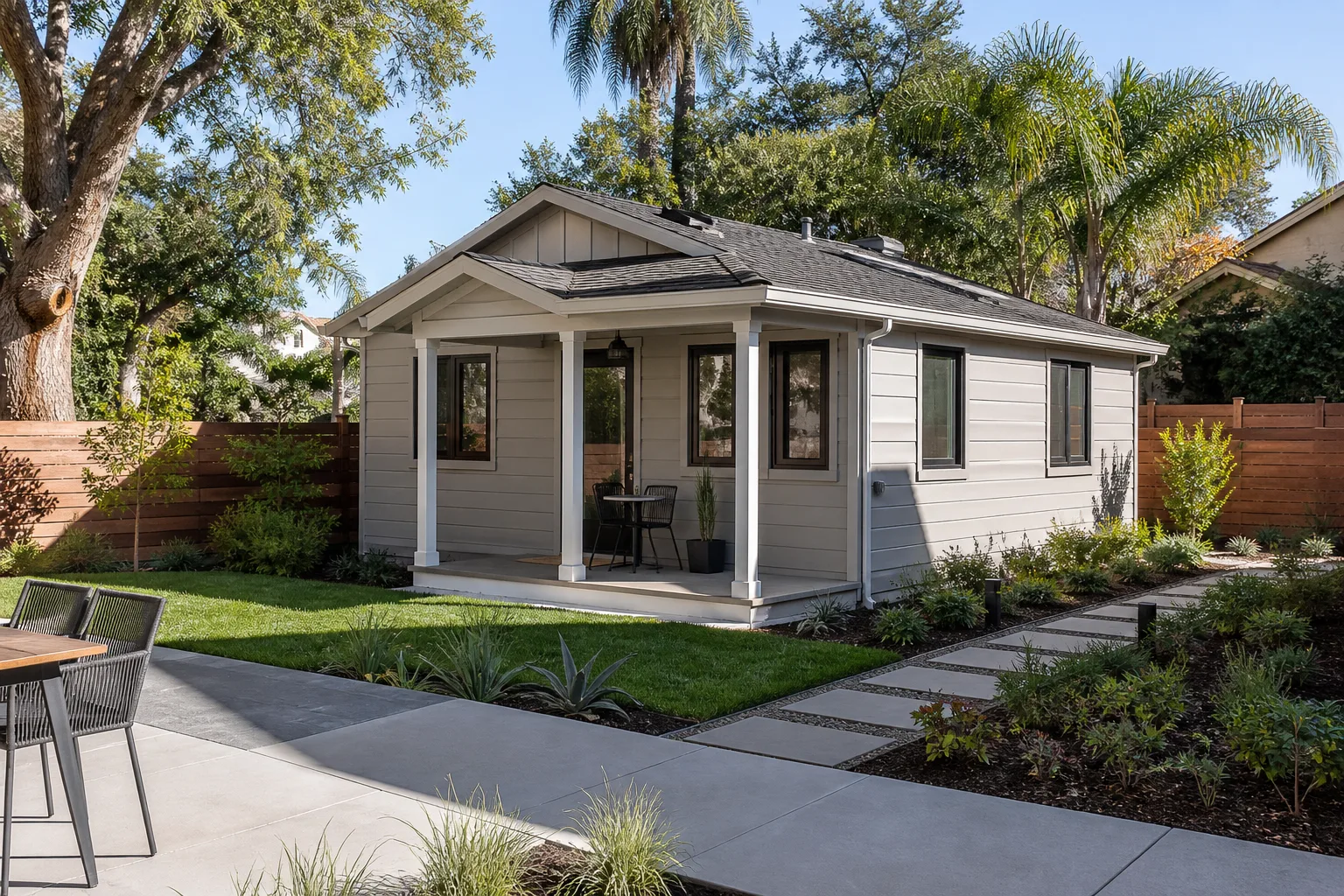
A full home addition or ADU project in Los Angeles runs $53,100 – $153,400 depending on square footage, foundation work, and the complexity of tying into the existing structure. That range is for complete builds, not isolated siding repair. If the James Hardie component is the issue on an existing structure, we price it separately: partial siding and trim replacement on one wall or elevation, new flashing at roof transitions, and repair of any compromised sheathing behind it.
Here’s what drives the range on the larger projects:
| Project Component | Los Angeles Range |
|---|---|
| Home Addition (complete) | $53,100 – $153,400 |
| ADU Construction (complete) | $106,200 – $259,600 |
| Garage Conversion | $35,400 – $94,400 |
Every quote we write includes the parts line, the labor line, the permit line, and the disposal line. You don’t get a single number that splits apart later. The 365-Day Done Right Promise covers the workmanship for a full year from the completion date, stated in writing: if something isn’t right, we fix it at no cost. That’s not a verbal assurance, it’s a contract term.
Los Angeles Department of Building and Safety permits are pulled on every addition and ADU we touch. We don’t do unpermitted work, and we don’t ask you to. Inspections are scheduled, passed, and documented.
DIY or Call Us?
What you can safely check yourself: run your hand along interior baseboards after a rain, look at the exterior caulk joints around windows and doors, and inspect the kickout flashing where any roof meets a vertical wall. Take photos of anything that looks cracked, stained, or gapped. That gives us a head start when you call.
What you shouldn’t do: pull siding off an occupied wall. The moment you expose sheathing, you’ve opened your home to water entry if Los Angeles gets rain before you close it back up, and you’ve likely voided whatever warranty remained on the assembly. Fiber cement also cuts with silica dust; doing that without proper respiratory protection and containment is a real health risk you don’t want in your living space. We treat this as a job for a crew with the right dust control and flashing practices, not a weekend project.
If you want a practical answer on whether it’s a patch or a bigger problem, call us. We’ll tell you what we see and give you the written number either way. That’s (213) 632-5711.
FAQs
James Hardie’s published material warranty runs 30 years, but in Los Angeles the realistic lifespan before you’ll want to address flashing and joint maintenance is 15 – 20 years, shorter in canyon or coastal-fog zones where moisture sits on surfaces longer. The siding itself rarely fails; the installation details fail first. Call (213) 632-5711 and we’ll do a free inspection and tell you honestly where your structure is in that timeline.
Yes, if the failure is isolated to flashing joints, caulk lines, or a few planks. We replace damaged pieces, install correct flashings, and reseal transitions. But if the sheathing behind the siding is soft or moldy, that section of wall assembly needs to come out and be rebuilt. Either way, you get a written quote before work begins.
Most single-wall siding and flashing repairs on a Los Angeles addition or ADU take one to two working days. Full replacement of all elevations or a sheathing rebuild can extend to a week. The estimate we give you includes the days, and we hold to it unless we open the wall and find something the previous builder hid, which we’ll document and show you before proceeding.
We stock common James Hardie trim boards, flashing components, and fasteners on our trucks, and panels are available through our Los Angeles suppliers within a few days. Most repairs don’t require a special order. If your structure needs a specific HardieZone rating or a discontinued profile, we’ll tell you on the first call and give you the real timeline.
Written by Isaac Pruett, Owner, Mason Remodeling Co at Mason Remodeling Co Los Angeles, serving Los Angeles and nearby areas.


