
Free written scope consultation - allowances, timeline, and change-order rules on paper before a single trade is scheduled
Jerith Home Additions & ADU: The Los Angeles Owner’s Guide
If you own a Jerith home addition or ADU and you’re hunting for a replacement part, you’re in the right place. We stock and install Jerith-compatible home addition and ADU components across Los Angeles, with most complete part replacements running $53,100 to $153,400 installed, depending on scope, framing condition, and finish level. Most Los Angeles owners discover a failing Jerith component the hard way: a soft spot in the subfloor near the addition’s tie-in point, moisture staining at the roofline where the addition meets the original structure, or a door that suddenly won’t latch square after years of settling.
We’re an independent Los Angeles service provider, not affiliated with Jerith, but we’ve worked on enough of their additions and ADUs across the city to know exactly what fails, why it fails, and what it costs to make it right. And unlike a lot of shops that will swap a part and walk away, we put the full picture in writing before we touch anything.
Which Jerith Models This Applies To
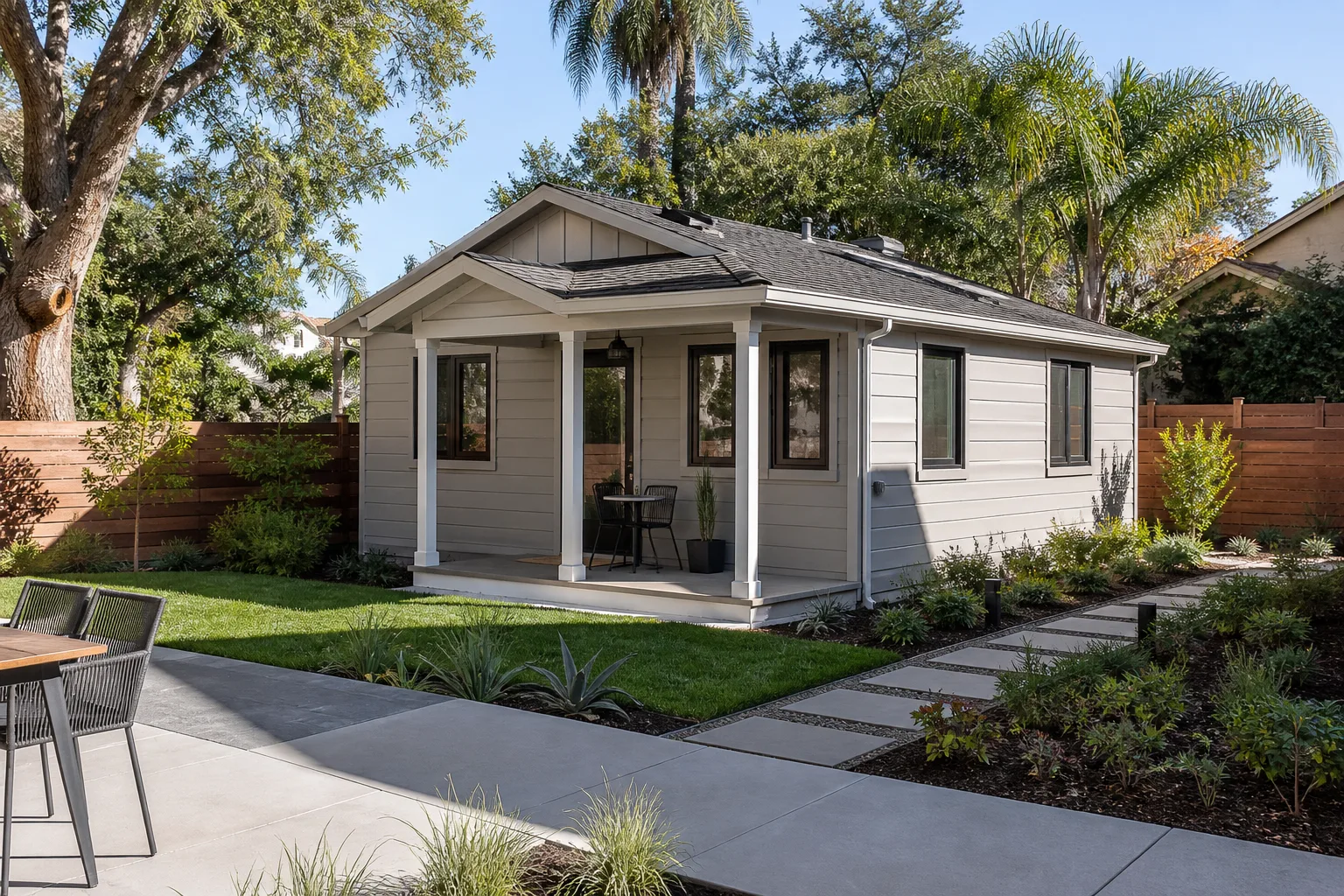
Jerith built additions and ADUs across Los Angeles through several distinct series lines, and the compatibility gotcha is this: the tie-in flashing and structural connectors used on pre-2015 Jerith additions are not interchangeable with the post-2015 revision, even when the exterior dimensions look identical. If you’re matching a part, look for the stamped metal identification tag on the beam pocket or the sill plate near the original foundation line. That tag carries the series code and the original install date, and it’s the fastest way to confirm what you’re dealing with.
For most Jerith home additions in Los Angeles, the first components to fail are the roof-to-wall transition flashing and the floor framing where the addition meets the original slab. That’s not a Jerith-specific defect; it’s what Southern California’s dry-wet-dry cycle does to any junction point over 15 to 20 years. We recommend OEM Jerith parts when we can source them, but honestly, for the structural connectors and flashing, a specification-grade aftermarket equivalent often outperforms the original and costs 20 to 30 percent less. We stock both options and we’ll show you the difference before you spend a dollar.
Styles & brands we work with







Signs Your Jerith Home Additions & ADU Is Failing
- Gaps at the tie-in wall. The addition pulls away from the original structure a fraction of an inch, usually due to differential settling. You’ll see daylight or feel a draft at the seam, and it means the structural connectors are working harder than they should.
- Sticking doors or windows in the addition. When the floor framing sags or the wall plates shift, the door and window openings go slightly out of square. A door that drags on the jamb after years of working fine is a structural red flag, not a hinge issue.
- Moisture staining where the addition roof meets the main house. That valley is the most vulnerable point on any Jerith addition in Los Angeles. Once the flashing fails, water follows the framing and the first visible sign is usually a faint tea-colored stain on the ceiling near the tie-in.
- Soft spots in the floor near the original foundation line. The transition from original slab to addition framing concentrates moisture and movement. A springy or soft floor there means the subfloor or joist ends have begun to rot.
- Cracks in the drywall at the corners of the addition. Recurring corner cracks, especially ones that reopen within months of patching, indicate the addition is still moving. That’s a sign the original underpinning or perimeter footing needs attention before any cosmetic work makes sense.
See the difference
 Before
 After
After Before
 After
After Before
 After
AfterReplacement Cost & What’s Included
In Los Angeles, a complete Jerith home addition or ADU component replacement typically runs $53,100 to $153,400 installed. The spread is not arbitrary. It depends on what the original builder left you: the condition of the perimeter footing, the type of underfloor access, whether the roof framing needs re-sheathing, and whether the original tie-in connectors need to be brought up to current Los Angeles code.
What we include in that number: the written scope of work, the parts (OEM Jerith or specification-grade equivalent, your call), all labor, job-site protection, debris removal, and the permit work if Los Angeles requires it for your scope. You get a fixed price in writing before work starts, and it does not change unless you ask us to expand the scope. Here’s what the range looks like by component:
| Scope | Typical Los Angeles Installed Range |
|---|---|
| Full home addition replacement | $53,100 – $153,400 |
| ADU structural repair (tie-in, framing, flashing) | $35,400 – $94,400 |
| Roof replacement on an existing addition | $9,440 – $23,600 |
| Floor framing repair at the tie-in line | $5,900 – $16,520 |
Every job we complete carries a written guarantee with stated terms: 365 days from the completion date, and if something’s not right, we come back and fix it at no charge. That’s the 365-Day Done Right Promise, and it applies without exception.
DIY or Call Us?
There’s an honest split here. You can safely inspect the visible signs: run your hand along the tie-in seam for drafts, look for staining at the roofline, probe the floor near the original foundation with a screwdriver if you suspect softness. Document what you find with photos and measurements. That helps us quote accurately over the phone, and it helps you understand what you’re actually dealing with.
What you should not do is attempt to re-secure structural connectors, lift a settling addition, or remove failed flashing on your own. The tie-in point between an addition and the original Los Angeles structure carries roof load, wall load, and live load, and if a connection lets go while you’re under it, the failure is not a slow process. The same goes for any work that touches the electrical panel or gas lines in the addition. This is where the trade’s skill actually matters. Call (213) 632-5711 and we’ll start with an honest conversation, not a sales pitch.
FAQs
Most Jerith additions and ADUs in Los Angeles are built to last 50 to 75 years structurally, but the tie-in flashings, roof transitions, and floor framing at the original foundation line typically need attention between year 15 and year 25 because of Southern California’s wet-dry cycling and seismic movement. Call (213) 632-5711 for a free assessment of your specific addition’s condition.
Yes, in most cases a failing Jerith addition or ADU component can be repaired rather than replaced, especially if the problem is confined to the tie-in connectors, flashing, or a localized section of floor framing; full replacement only makes sense when the original framing or footing has deteriorated beyond salvage. Call (213) 632-5711 and we’ll tell you straight which path applies to your situation.
Most Jerith addition and ADU component replacements in Los Angeles take 2 to 4 weeks from start to final inspection, depending on whether the permit office has a backlog, whether the roof framing needs re-sheathing, and whether the weather cooperates during any exterior phases. We’ll put the timeline in your written proposal, not as an estimate but as a schedule with defined milestones.
We stock the most common Jerith-compatible structural connectors, flashing profiles, and subfloor materials on our trucks for the typical Los Angeles addition geometry, and we can source OEM Jerith parts within 3 to 5 business days when the original component is required for warranty or code compliance. Call (213) 632-5711 with your series code and we’ll confirm availability while you’re on the phone.
Written by Isaac Pruett, Owner, Mason Remodeling Co at Mason Remodeling Co Los Angeles, serving Los Angeles and nearby areas.


