
Free written scope consultation - allowances, timeline, and change-order rules on paper before a single trade is scheduled
Mr-Glass Home Additions & ADU: The Los Angeles Owner’s Guide
We install and build Mr-Glass-compatible home additions and ADUs across Los Angeles, with full projects typically running $53,100 – $153,400 depending on square footage, foundation work, and finish level. Most owners call us after a permit gets flagged, a foundation corner settles, or a prefab panel seam starts leaking during a winter rain. The discovery is almost never planned: you notice a hairline crack running up a wall joint, or you spot daylight through a corner where the Mr-Glass panel meets the roofline. That’s the moment to look at the whole structure, not just the visible crack.
We’re an independent Los Angeles contractor, not a Mr-Glass dealer or affiliate. What that means for you: we work on Mr-Glass systems constantly, we know which generation of panel you have by looking at the seam profile and fastener pattern, and we don’t have to wait on a manufacturer rep to diagnose a failure.
Which Mr-Glass Models This Applies To
Mr-Glass home additions and ADU shells span three main generations, and the compatibility gets tricky if you don’t know which one you have. The first-generation panels (roughly pre-2016 builds) used a flush-seam profile with exposed aluminum trim at every corner. Second-generation panels moved to a tongue-and-groove interlock with a neoprene gasket inside the seam. The current third generation uses a thermal-break panel with a wider, flatter seam and integrated drainage channels.
Here’s the gotcha most Los Angeles owners hit: second- and third-generation panels are not interchangeable at the connection points. The interlock depth changed by 5mm between generations, which is enough that a second-gen panel won’t seat into a third-gen frame without a visible step and a compromised seal. If your addition was built between 2016 and 2021, you most likely have second-gen panels. Buildings permitted after 2021 generally have third-gen. Look for the printed label on the interior face of any panel near a corner: the model code starts with MG-2 or MG-3. If that sticker is painted over, measure the exposed seam width; second-gen seams run 12mm wide, third-gen runs 17mm.
Styles & brands we work with







Signs Your Mr-Glass Home Additions & ADU Is Failing
- Seam gasket rot or extrusion. On second-gen tongue-and-groove panels, the neoprene gasket inside the seam breaks down after years of Los Angeles UV exposure plus winter moisture. You’ll see small black rubber bits working out from the panel joints, especially on south-facing walls. That gasket is your weather seal, and once it extrudes, water gets behind the panel.
- Corner trim lifting or cracking. First-gen units used aluminum corner trim that expands and contracts at a different rate than the panel itself. After a few hot summers and cool nights, the trim pops its fasteners and bows outward. The panel behind it is still shedding water until it isn’t; water gets in behind the trim and sits against the sill.
- Condensation or staining at the interior sill. This is the one that gets ignored because it looks minor. A brownish drip line under a window or along the bottom track inside the ADU means the panel drainage channel is blocked or breached. Mr-Glass panels are designed to drain at the bottom, but Los Angeles dust, leaf litter from jacarandas, so add that to the list and even city grime clog those weep channels over time.
- Door or window frame binding. If a sliding door in the ADU starts to catch mid-track, the panel system above it may have shifted from foundation movement. Los Angeles sits on expansive clay soils in the Valley and sandy loams near the coast. Minor settlement is normal, but when the panel above a rough opening moves more than a quarter inch, the frame binds.
- Visible fastener pop or panel bowing. Walk the outside and sight down each wall. A bulging panel line, or a screw head that you can now see through the finish, means the panel has pulled from the frame behind it. That’s not cosmetic; a loose panel can flex in wind and crack at the seam.
See the difference
 Before
 After
After Before
 After
After Before
 After
AfterReplacement Cost & What’s Included
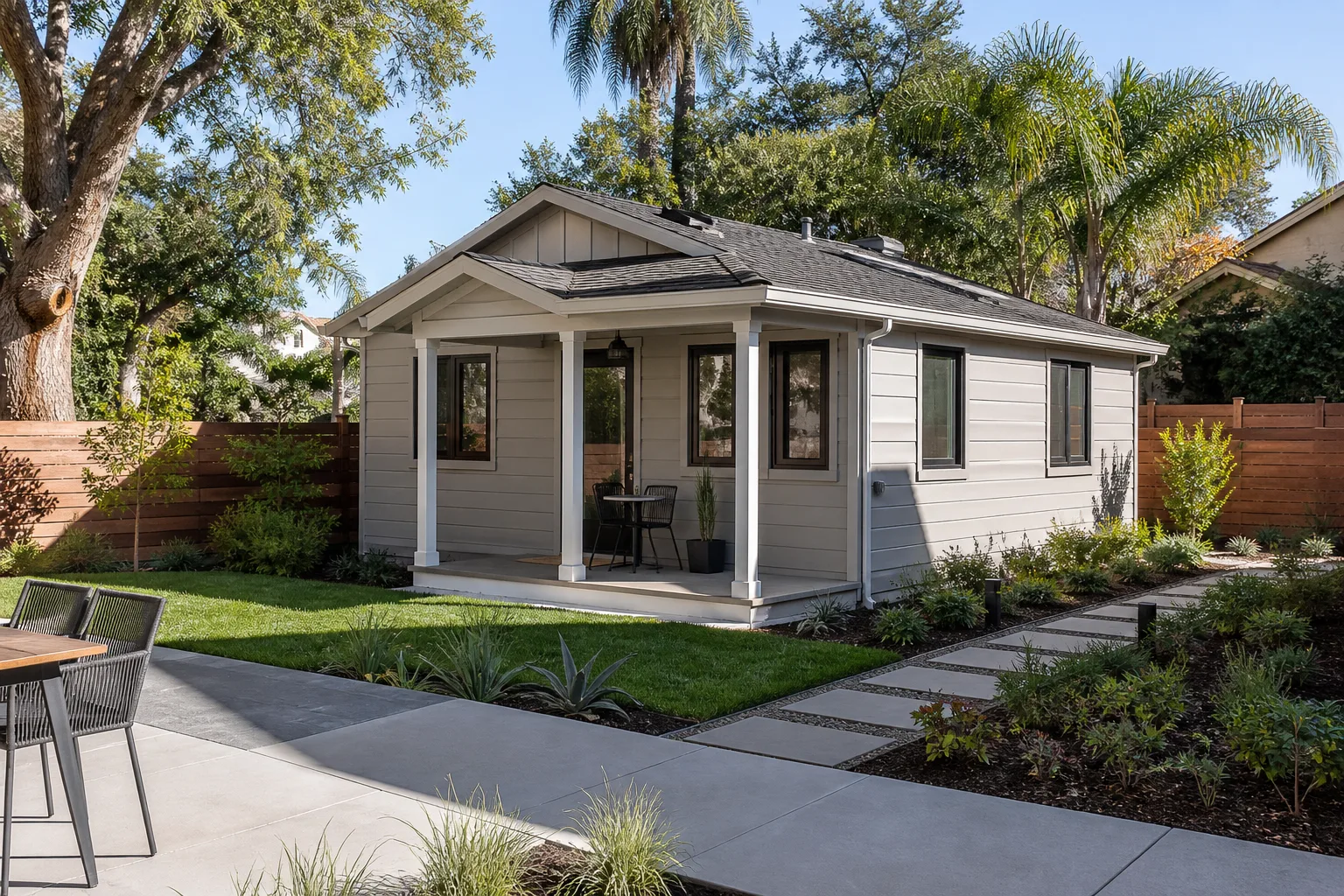
For Mr-Glass home additions and ADUs in Los Angeles, you’re looking at $53,100 – $153,400 for full replacement or substantial rebuild work. The spread comes down to four things: the square footage of the structure, whether the foundation can be reused or needs repair, which generation of panel you have, and the finish level you want on the inside.
A smaller replacement on a sound slab with a simple interior might land near the low end. A larger ADU with a failing perimeter footing, rotted bottom tracks, and full interior refinishing will push toward the high end. Every job gets a written line-item price before we start, including panel materials, framing corrections, fasteners, sealants, and labor. No verbal estimates that grow on the final bill. The work is covered by our written guarantee, and if something fails within 365 days of completion, we come back and make it right at no cost.
The lead range of $53,100 – $153,400 matches what we quote across Los Angeles County for complete Mr-Glass home addition and ADU replacements. Smaller jobs like garage conversions run $35,400 – $94,400, while a full new ADU build on a fresh foundation runs $106,200 – $259,600. Here’s how the related project costs break down:
- Home Addition (this page’s focus): $53,100 – $153,400
- ADU Construction: $106,200 – $259,600
- Garage Conversion: $35,400 – $94,400
- Kitchen Remodel (common inside these additions): $16,520 – $53,100
- Bathroom Remodel (especially in new ADUs): $10,620 – $33,040
DIY or Call Us?
There are a few things you can safely check on your own: walk the perimeter and photograph any visible cracks, trim lifting, or panel bowing. Note which wall faces which direction. Check the interior sills after rain. That documentation helps us quote faster. But I want to be direct about this: opening up a Mr-Glass panel seam means releasing whatever tension that panel was installed under. The panels are large, heavy, and under load from the roof structure above. A panel that slips during removal can drop a roof edge on whoever is standing under it. We do this work with lift equipment, temporary bracing, and at least two people on the panel at all times.
If you’re tempted to re-seal a leaking seam with silicone from a hardware store: you’ll buy yourself a few dry months, at best. Silicone doesn’t bond well to the neoprene gaskets inside Mr-Glass seams, and it makes the eventual proper repair more expensive because we have to strip it all out. If the seam is leaking, call (213) 632-5711 and talk to a live person. We’ll tell you honestly whether you need a patch or a replacement; we won’t sell you a rebuild you don’t need.
FAQs
Expect 20 – 30 years from a well-installed Mr-Glass shell in Los Angeles before you’re looking at serious panel or gasket work. The factors that shorten that lifespan in LA specifically are UV degradation on south-facing seals, air pollution and salt air near the coast attacking the aluminum trim and fasteners, and soil movement causing structural stress. First-generation units with flush-seam trim tend to show problems 5 – 8 years earlier than second- and third-gen systems. Call (213) 632-5711 for an inspection if your build is older than 15 years.
Yes, in many cases a failing panel can be repaired if the damage is limited to a seam gasket or bottom drainage track. We can remove the failed gasket, clean the seam channel, install a new gasket, and reset the panel correctly. But if the panel itself is cracked, bowed more than a half inch, or the frame behind it has rotted from long-term water intrusion, replacement is the honest answer. Repairing a structurally compromised panel is money spent on a part that will fail again. Call (213) 632-5711 and we’ll tell you which situation you have.
A panel-seam repair or partial panel replacement typically takes 2 – 4 days including sealing and water-testing. A full shell replacement on an existing foundation runs 4 – 8 weeks depending on size and finish work. A complete ADU rebuild from foundation up runs 3 – 5 months with permits. We’ll give you a written schedule with the written price, and updates as the job moves; you won’t be guessing what happens next.
We stock common replacement components on our Los Angeles trucks: seam gaskets, bottom track drain inserts, corner trim, fasteners, and sealants. Full panels are ordered per job based on generation and dimensions, since we won’t guess at a panel size or interlock profile you don’t have. For the other brands we support, we also carry installation materials for KraftMaid cabinetry, Cambria surfaces, and Silestone quartz in our shop inventory.
Written by Isaac Pruett, Owner, Mason Remodeling Co at Mason Remodeling Co Los Angeles, serving Los Angeles and nearby areas.


