
Free written scope consultation - allowances, timeline, and change-order rules on paper before a single trade is scheduled
Plant Prefab Home Additions & ADU: The Los Angeles Owner’s Guide
Plant Prefab home additions and ADU construction in Los Angeles typically runs $53,100 to $153,400 for a complete project, with the final number driven by square footage, site prep, foundation work, and finish level. We stock the connection hardware, panelized wall systems, and flashing components needed to tie new Plant Prefab-compatible modules into existing structures, and we can start most projects within two weeks of your free estimate. The failure point owners call us about most often isn’t the prefab panel itself: it’s the seam where the new module meets the existing house. Los Angeles heat cycles expand and contract those joints relentlessly, and after five or six summers, the sealant gives way and water finds the gap.
We’re an independent contractor, not affiliated with Plant Prefab, but we’ve worked on enough of these systems across Los Angeles County to know exactly what fails, when it fails, and what it costs to make it right.
Which Plant Prefab Models This Applies To
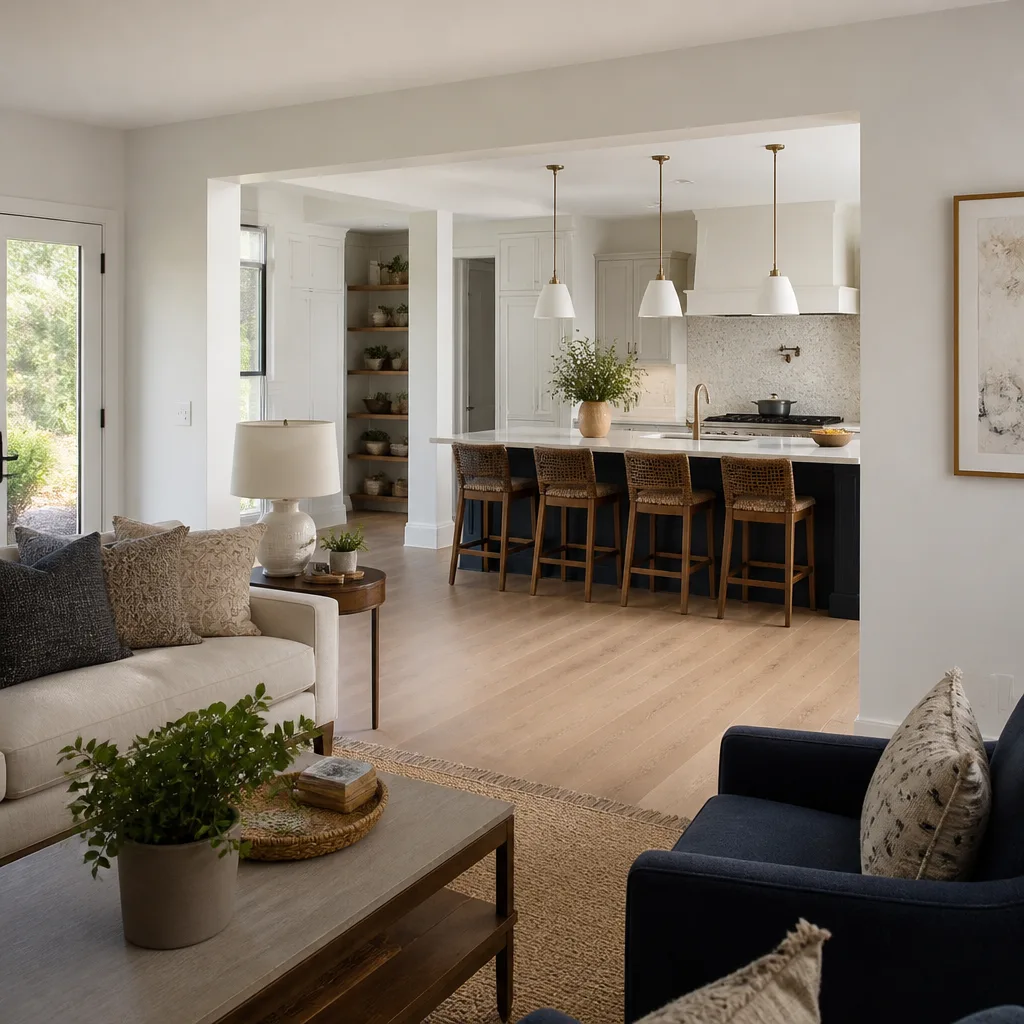
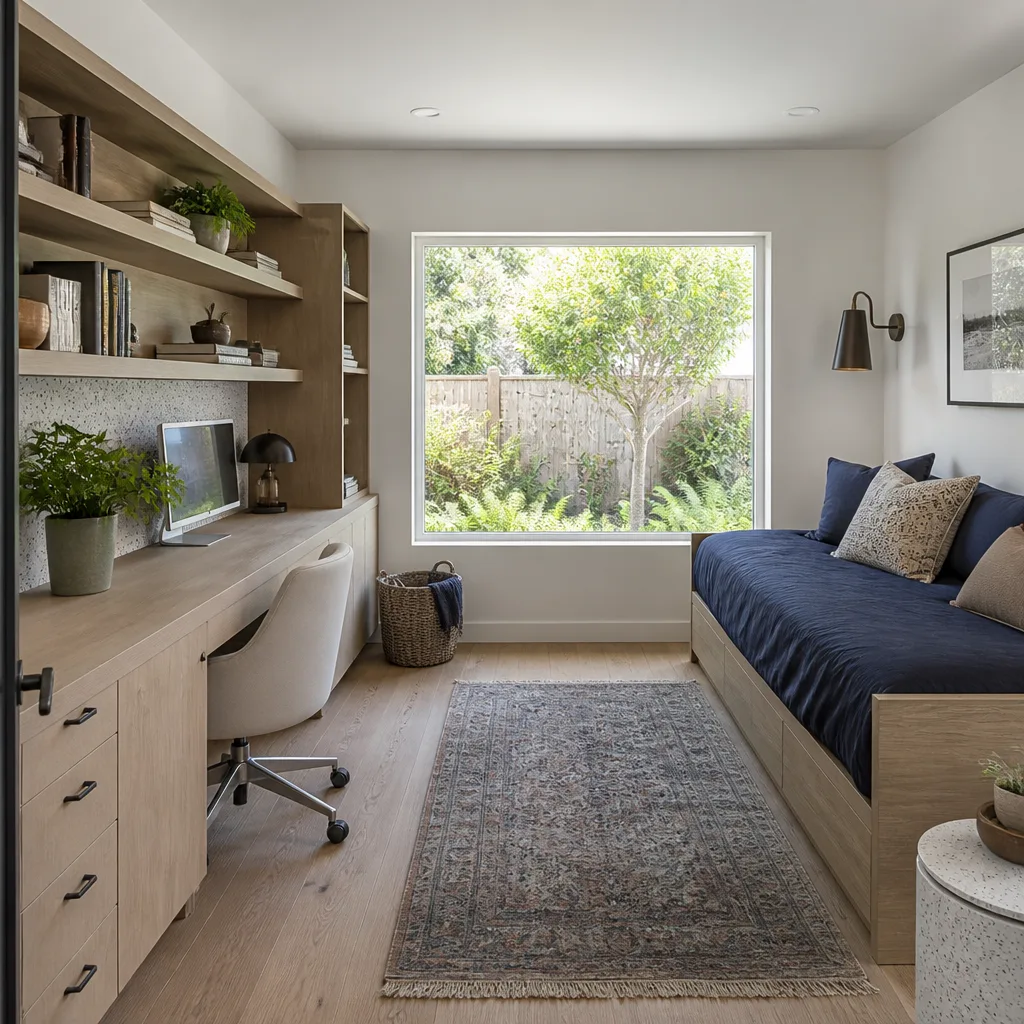
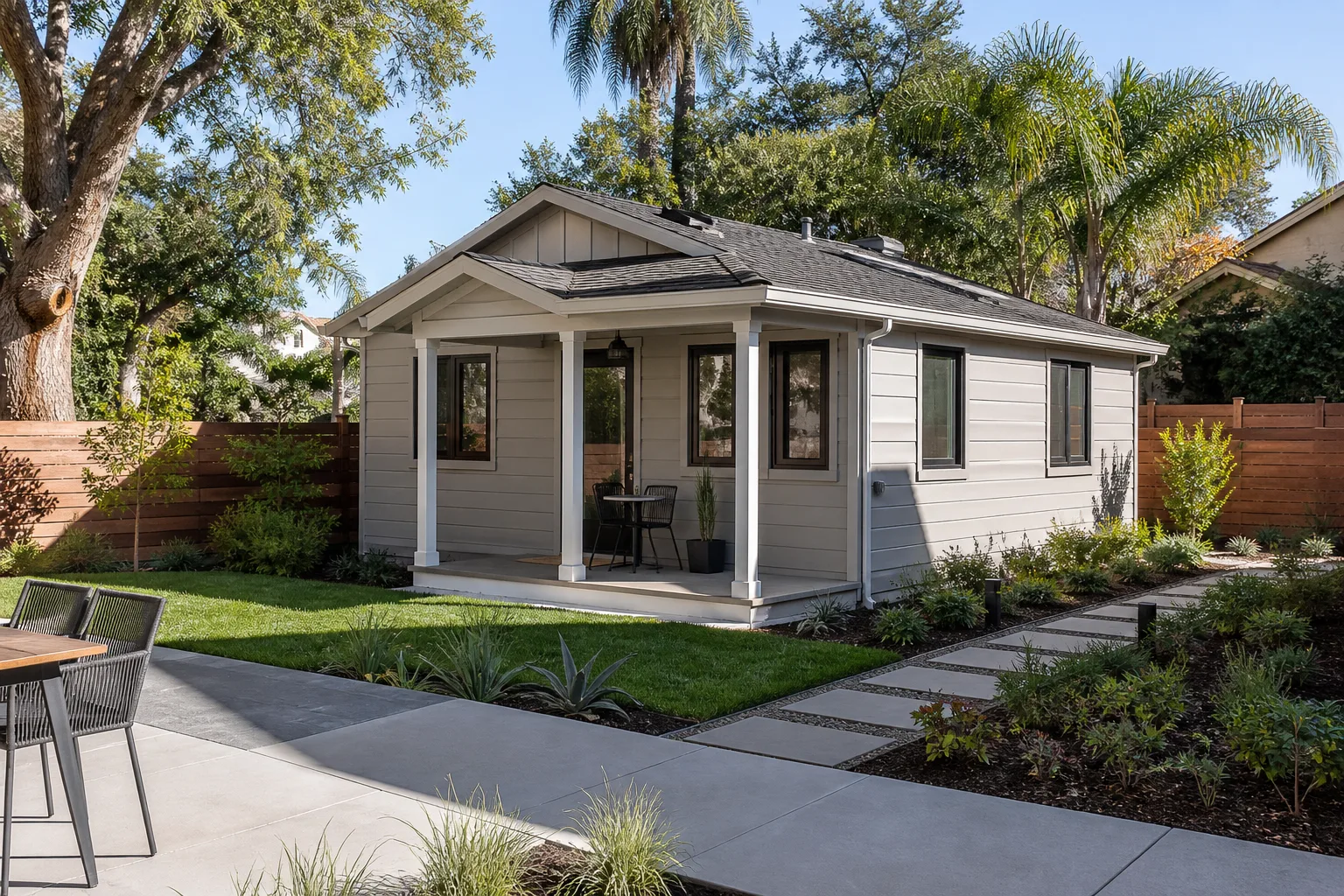
Plant Prefab builds homes and additions using panelized construction: walls, floors, and roof sections arrive flat-packed or as pre-assembled modules, then get craned or lifted into place on your foundation. The home additions and ADU work we do covers the full range of what Plant Prefab produces, from single-room bump-outs to detached backyard units in the 400 to 1,200 square foot range.
The compatibility gotcha most Los Angeles owners don’t know about until something leaks: Plant Prefab panels are engineered to specific tolerances that don’t forgive sloppy site work. A foundation that’s off by three-quarters of an inch over forty feet will telegraph through every wall joint, door frame, and window opening in the addition. That’s why our crew checks slab flatness with a laser level before a single panel gets unloaded. If your existing foundation or the new pad pour is out of spec, we fix that first. Skipping that step is how you get drywall cracks at every seam within the first year.
On the OEM-versus-aftermarket question for Plant Prefab specifically: the structural connectors and hold-down hardware are engineered fasteners. Those we match to the original spec, no shortcuts. The sealants, flashing, and weather barriers, though, are commodity building materials. We use Gaf and CertainTeed roofing and flashing products, plus professional-grade polyurethane sealants that hold up better in direct Los Angeles sun than what many prefab factories put on at the plant. The factory sealant on Plant Prefab joints, especially south-facing and west-facing exposures, tends to dry out and crack within four to six years here. UV degradation is the number one failure we see, well before any structural issue.
Styles & brands we work with







Signs Your Plant Prefab Home Additions & ADU Is Failing
- Water staining at the ceiling-to-wall seam where the addition meets the original house. The connection joint between old framing and new module has shifted with temperature swings, and the sealant has separated. Water follows the gap, shows up as a coffee-colored stain, and the repair involves opening that seam, cleaning out the failed sealant, and re-flashing the intersection properly.
- Cracks running diagonally from the corners of windows or doors. Panelized construction moves as a unit, but if the foundation settled or wasn’t level to begin with, stress concentrates at openings. A crack wider than the edge of a dime means the panel has shifted enough that cosmetic patching won’t hold.
- Gaps opening between the baseboard and the floor. In Los Angeles, expansive clay soil under many neighborhoods (the San Fernando Valley, parts of Mid-City, areas south of the 10) swells and shrinks with rain and drought. When the soil moves, the addition moves with it. Gaps at the baseboard are your earliest warning that the slab or pier system is reacting to soil conditions.
- Doors that stick in summer but swing fine in winter. Seasonal racking. The module is expanding and contracting against the existing structure, and the door frame is the tightest point in that dance. If you have to shoulder the door open in August, the joint between structures needs adjustment and re-sealing before the problem migrates into the walls.
- Musty smell inside the ADU or addition, especially after rain. Water is getting in somewhere, but not necessarily where you can see it. Failed flashing at the roof-to-wall intersection, a compromised weather barrier behind the siding, or improper drainage at the foundation edge can all saturate the wall cavity and grow mold before a visible stain ever appears.
See the difference
 Before
 After
After Before
 After
After Before
 After
AfterReplacement Cost & What’s Included
Here’s what you can expect to pay in Los Angeles for Plant Prefab home addition and ADU work, including all parts, labor, and site prep:
- Home Addition (Plant Prefab-compatible panelized construction): $53,100 – $153,400
- ADU Construction (detached, full foundation and utilities): $106,200 – $259,600
- Garage Conversion (structural upgrades, insulation, utilities): $35,400 – $94,400
- Connection joint repair and re-flashing (addition-to-house seam): $4,720 – $15,340
- Foundation leveling or slab correction under an existing addition: $8,260 – $21,240
The range is wide because every site is different. A one-story bump-out on a flat lot with easy crane access costs far less than a two-story addition on a hillside in Silver Lake where the crane has to be positioned forty feet below the work zone. What’s included in every number: a written line-item price before work starts, all permits pulled by us, all inspections scheduled and passed, the crew’s identity confirmed before they arrive, and the work backed by our 365-Day Done Right Promise. If something isn’t right within a year of completion, we fix it at no cost to you.
DIY or Call Us?
There’s an honest split here. You can safely check for obvious signs of failure yourself: run your hand along the seam where the addition meets the original house and feel for gaps, look for ceiling stains after the first good rain of the season, and check that doors open and close without binding. What you should not do is try to reseal a failed joint, re-level a settled module, or tackle any structural repair on your own. Panelized additions are engineered systems. A wrong fastener, a misapplied sealant, or an improper shim job can make the problem worse and void any warranty coverage still in effect. When you’re dealing with a failed connection between structures, you want a crew that’s seen this exact failure across Los Angeles and knows what it should cost to fix. Call (213) 632-5711 and we’ll send someone out to look, measure, and put a written number in your hand.
FAQs
The structural panels themselves should last 50 years or more with proper drainage and maintenance, but the sealants and flashing that keep water out of the joints typically need attention every 5 to 8 years in Los Angeles’s UV-heavy climate. Budget for resealing and re-flashing as a maintenance item, not a one-time cost. Call (213) 632-5711 if you think a joint has failed, and we’ll assess it honestly.
In most cases, yes. Failed sealant, deteriorated flashing, minor foundation settling, and even moderate panel shifting can usually be corrected without tearing the structure down. The exception is when water has been getting in long enough to rot the framing or grow mold inside the wall cavity. We’ll open the affected area, show you exactly what we find, and give you a written price for the repair before any work proceeds.
A typical Los Angeles addition takes 4 to 6 months from permit approval to final inspection. Detached ADUs run 5 to 8 months depending on utility connections and site conditions. Connection joint repairs on an existing addition are usually done in 1 to 2 days. We’ll give you a written schedule with your written price, and we’ll tell you upfront what can delay the timeline: Los Angeles Department of Building and Safety plan check times, utility hookup scheduling, and weather windows for crane work.
We stock the common failure-point materials on our trucks: professional-grade polyurethane sealants, flashing profiles in standard widths, structural fasteners rated for engineered wood, and weather barrier products. For proprietary Plant Prefab components, we can source them directly or work with you on factory-approved equivalents. You’ll know the parts cost and availability before we start, because it’s in the written estimate.
If you’ve got a Plant Prefab addition or ADU in Los Angeles that’s leaking, cracking, sticking, or just not performing the way it should, call (213) 632-5711. We’ll send a crew that shows up on time, introduces themselves by name, and hands you a written price before any tool comes off the truck. Know who’s coming, know what it costs, know it’s guaranteed, everything else is just noise.
Written by Isaac Pruett, Owner, Mason Remodeling Co at Mason Remodeling Co Los Angeles, serving Los Angeles and nearby areas.


